The Convenience Retail Loyalty Playbook – Chapter 3: How to Wow – Part 1
How can you build a loyalty program that truly wows your customers? The Convenience Retail Loyalty Playbook. Convenience retail has unique challenges and demands a unique approach in this digital age. The Convenience Retail Loyalty Playbook has been written to help retailers use our loyalty platform to get the best possible results from their loyalty program. Summarized from Chapter 3, “How to Wow – Part 1” outlines the basic principles for a successful loyalty program in the convenience retail industry. Watch this video to learn the “Three C’s for a Great Foundation” as well as Part 2 to learn the “Three E’s to Being Brilliant” in your convenience retail loyalty program.
Paula Thomas
Former Chief Content Officer
Expert Guides
How to Wow (Part 1)
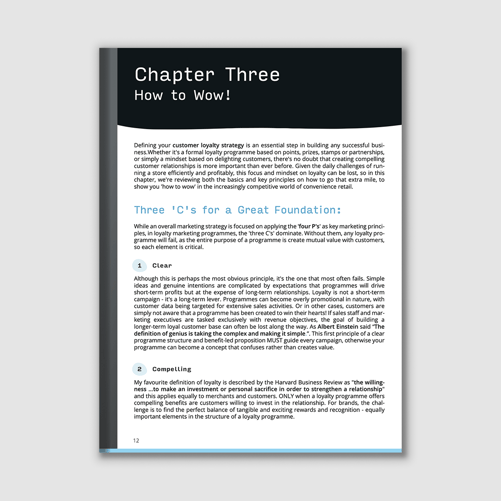
Defining your customer loyalty strategy is an essential step in building any successful business. Whether it’s a formal loyalty program based on points, prizes, stamps or partnerships, or simply a mindset based on delighting customers, there’s no doubt that creating compelling customer relationships is more important than ever before. Given the daily challenges of running a store efficiently and profitably, this focus and mindset on loyalty can be lost, so in this article, we’re reviewing both the basics and key principles on how to go that extra mile, to show you ‘how to wow’ in the increasingly competitive world of convenience retail.
Three ‘C’s for a Great Foundation:
While an overall marketing strategy is focused on applying the ‘four P’s’ as key marketing principles, in loyalty marketing programs, the ‘three C’s’ dominate. Without them, any loyalty program will fail, as the entire purpose of a program is to create mutual value with customers, so each element is critical.
- Clear: Although this is perhaps the most obvious principle, it’s the one that most often fails. Simple ideas and genuine intentions are complicated by expectations that programs will drive short-term profits but at the expense of long-term relationships. Loyalty is not a short-term campaign – it’s a long-term lever. Programs can become overly promotional in nature, with customer data being targeted for extensive sales activities. Or in other cases, customers are simply not aware that a program has been created to win their hearts! If sales staff and marketing executives are tasked exclusively with revenue objectives, the goal of building a longer-term loyal customer base can often be lost along the way. As Albert Einstein said, “The definition of genius is taking the complex and making it simple.”. This first principle of a clear program structure and benefit-led proposition MUST guide every campaign, otherwise, your program can become a concept that confuses rather than creates value.
- Compelling: My favorite definition of loyalty is described by the Harvard Business Review as “the willingness …to make an investment or personal sacrifice in order to strengthen a relationship” and this applies equally to merchants and customers. ONLY when a loyalty program offers compelling benefits are customers willing to invest in the relationship. For brands, the challenge is to find the perfect balance of tangible and exciting rewards and recognition – equally important elements in the structure of a loyalty program. The best programs offer both functional AND emotional benefits that customers understand and appreciate. With compelling reasons to join, customers’ behavior measurably changes and responds to our proposition.
- Consistent: Another frequent mistake made by loyalty programs is the lack of relevant communications sent to members. Campaigns can be designed to educate, sell, or ‘surprise and delight’ but sometimes the most effective communications are those that simply say thanks. Effective communications are sent consistently over the long term, long after internal stakeholders lose the initial excitement that accompanies a program launch. The campaigns sent out in the weeks, months and years after the program launches must of course continue to be relevant and personalised while remembering that just because a campaign has been sent doesn’t mean it’s been seen or heard. It’s critical to engage consistently and respectfully across multiple channels if we expect to cut through our customers’ busy lives and connect. George Bernard Shaw famously reminds us that the “single biggest problem with communication is the illusion that it has taken place” – this basic problem affects many loyalty programs as they try to consistently maintain an effective and engaging frequency and format for their campaigns long-term.
Proven strategies to grow frequency, increase basket size and strengthen your digital ecosystem.