Games, Habits, and Higher Engagement: How Gamification Lifts Loyalty Results
28 May 2026
Discover how gamification turns everyday loyalty offers into habits, higher visit frequency, and results that your whole program can feel.
Gamification
Carolyn Schnare
Chief Content Officer
Insights
Most loyalty programs have the same basic architecture where members earn points, redeem coupons, and collect stamps. Those mechanics are important, but on their own, they rarely create the kind of behavior that separates a good program from a great one.
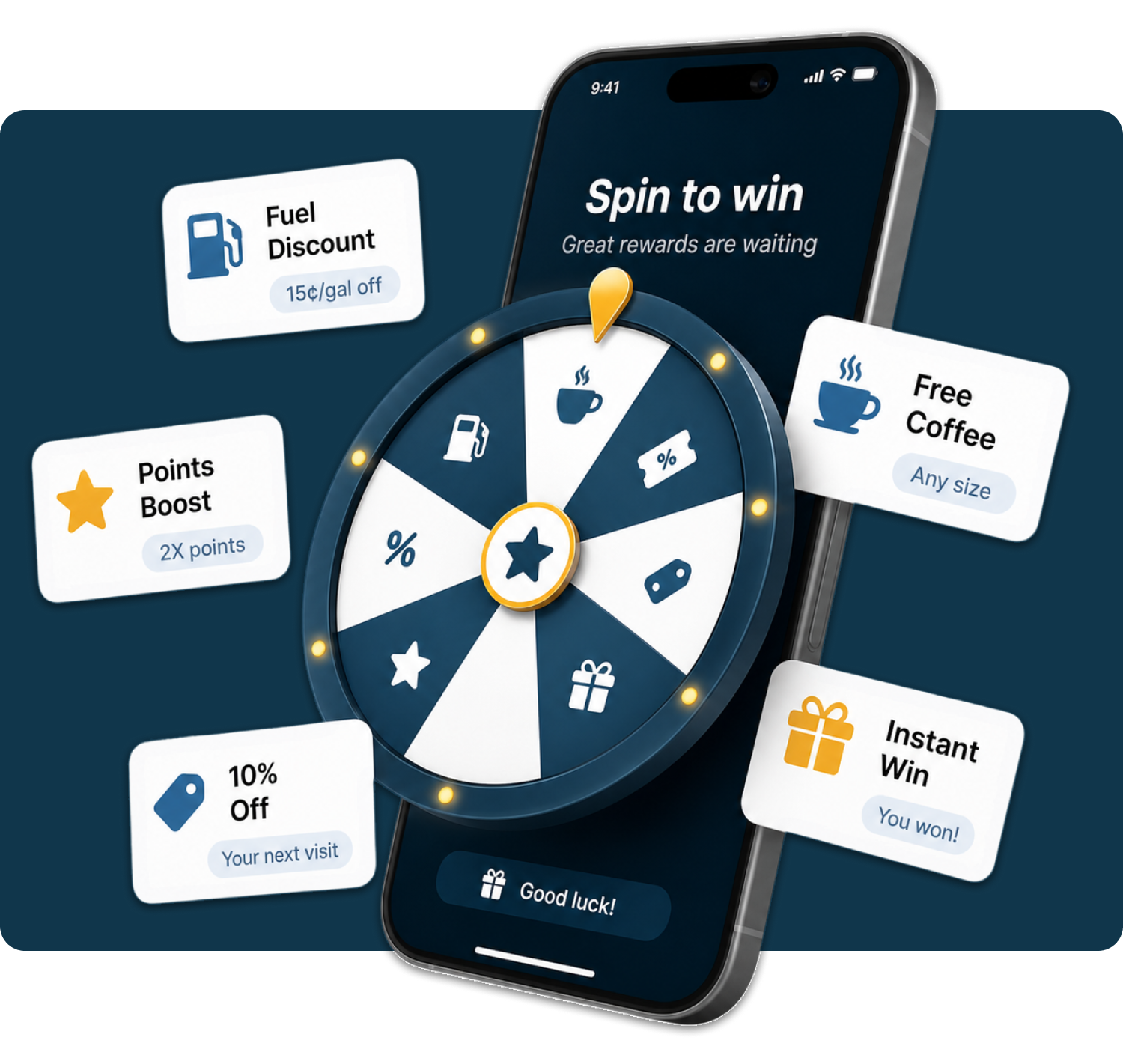
When a discount is wrapped in a game, it stops feeling like a transaction and starts feeling like something worth showing up for. A spin of a fortune wheel, a scratch card reveal, and a daily slot machine pull are not gimmicks layered on top of a loyalty program. They are mechanics that connect directly to coupons, stamps, points, and subscriptions, and they change the psychology of how members experience every offer you send.
Gamification leads to a program that members open more often, redeem more actively, and build genuine habits around.
The most durable loyalty programs are the ones that become part of a routine. Members do not think about whether to open the app; they just do it, the same way they check the weather or scroll through their messages. Getting there requires something to pull them in consistently, and a daily game is one of the most effective tools available for building that pull.
Running a daily play that unlocks a small, instant reward gives members a reason to open the app every single day, not just when they receive a push notification. Modern game mechanics with full graphics, sound, and haptics make that experience feel exciting!
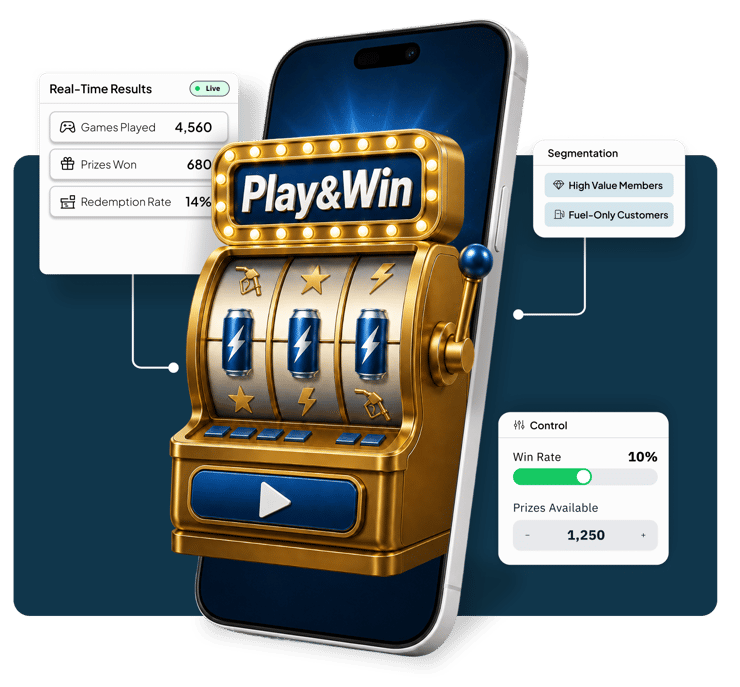
The prizes themselves can be adapted to match your margins, your promotional calendar, and the season. Product discounts, free items, fuel savings, extra stamps, or loyalty points all work within the game framework, and the platform lets you set odds, prize pools, and issuance caps so the campaign stays in budget no matter how many members are playing.
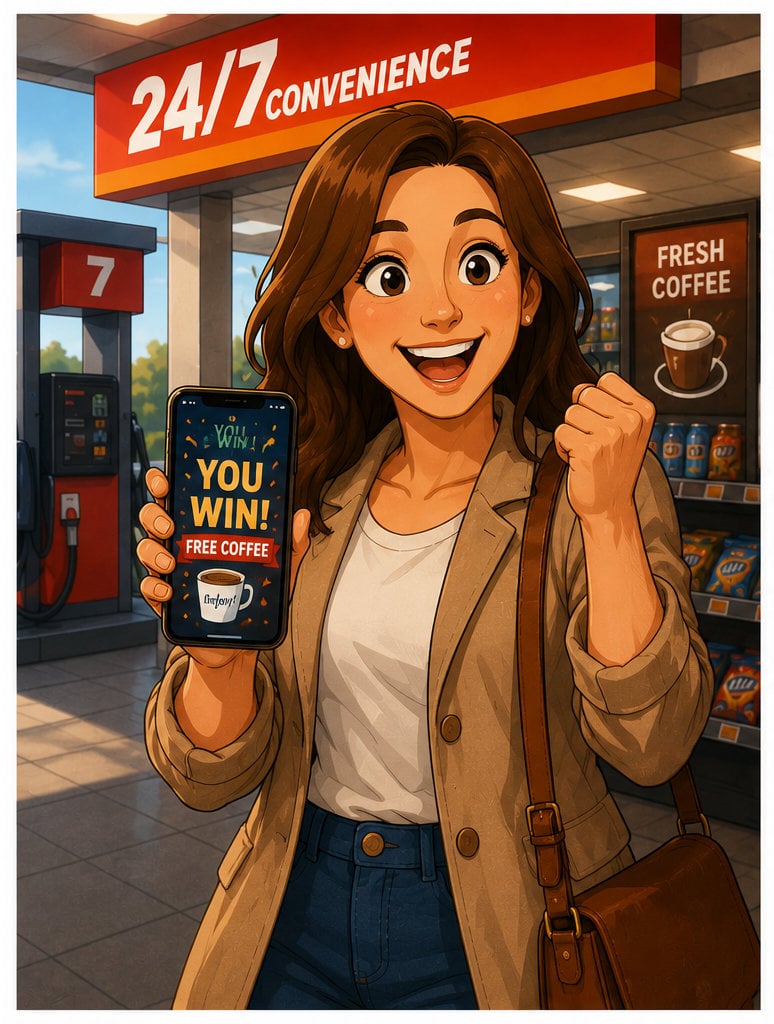
Consider Jenna, who pulls up to the pump every week on her way to work and rarely walks through the door. Her receipt data shows she has bought coffee a handful of times and grabbed a donut on the occasional Friday, but the in-store habit has never quite taken hold. A daily game changes her relationship with the app entirely. Rather than waiting for Jenna to wander in on her own, a daily play drops a coffee prize or a food offer directly into her hands. The reward feels earned because it came through gameplay, and the visit she makes to redeem it is one she was already planning around. Over time, that daily check-in becomes the nudge that turns a fuel stop into a full store visit.
One of the less obvious things a well-designed game can do is help you learn more about the people playing it. Pairing gameplay with a brief question before the reward unlocks is a low-friction way to gather the kind of profile data that makes future campaigns sharper.
Members are far more willing to answer a quick question when a reward is waiting on the other side. Over time, those small data points add up to richer member profiles, enabling smarter segments, more relevant offers, and lifecycle messaging that actually reflects who the member is rather than just when they last visited. This approach to progressive profiling means you are never front-loading a long registration form, you are collecting information gradually and putting it to work in every campaign that follows.
Social mechanics extend this same spirit outward. A Share and Care reward gives members something they can gift to a friend, which turns a loyalty interaction into a real conversation. Add a Recruit-a-Friend bonus triggered after that friend's first purchase, and you have a referral engine that runs through gameplay rather than a separate campaign. Members feel like they are doing something generous rather than responding to a marketing prompt, and your program grows through word of mouth that feels genuinely human.
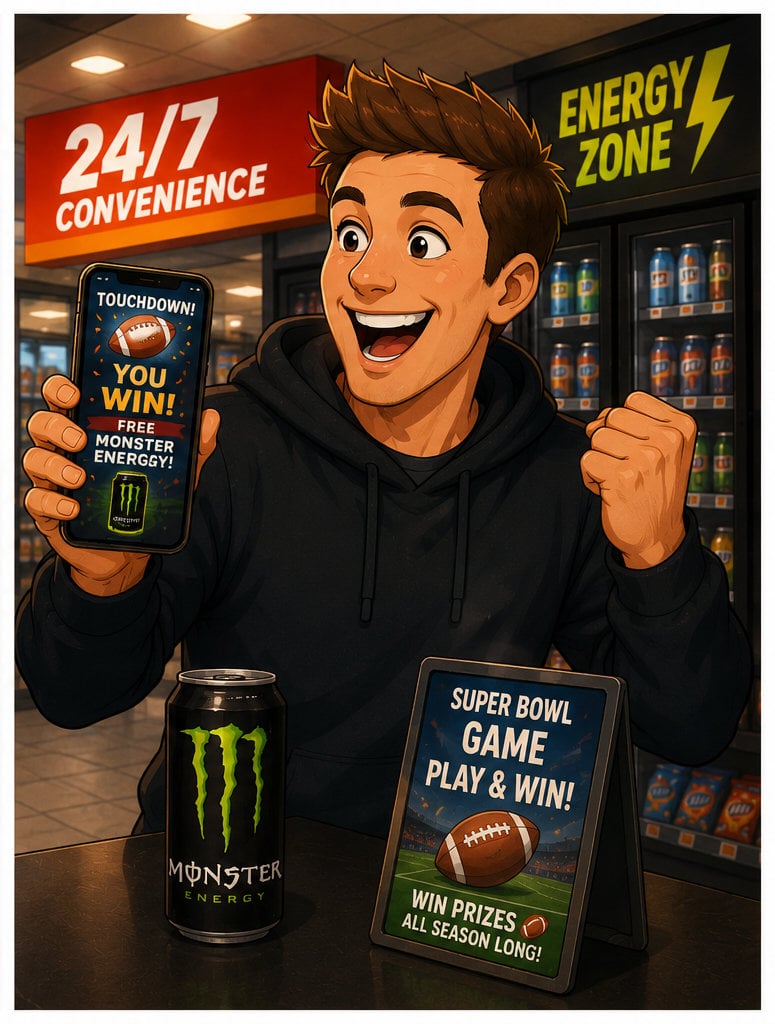
Seasonal campaign games are effective plays to build excitement around holidays. Matt visits seven or more times in a three-week stretch and buys energy drinks on nearly every trip. He is exactly the kind of member who responds well to a limited-time campaign built around something he already cares about.
A themed game tied to a big seasonal moment, whether that is a summer promotion, a Super Bowl week slot machine, or a July 4th fortune wheel, gives Matt a reason to engage at a higher level than a standard coupon. Matt is a frequent energy drink shopper who already earns lots of points and loves his stamp card. Package that game as a joint marketing effort with a vendor like Coca-Cola or Monster Energy, and the campaign becomes something that a brand partner can help fund through co-op dollars while also delivering category lift for their products. Themed seasonal games also give your program a sense of personality and momentum through the year.
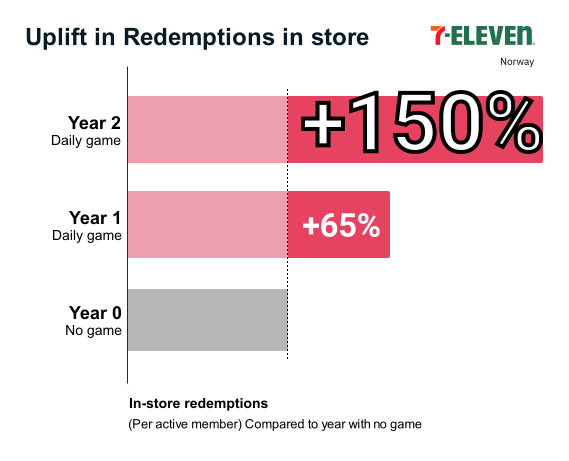
When 7-Eleven introduced simple daily games into its loyalty program, member behavior shifted in ways that are hard to achieve through conventional offer mechanics alone.
App openings increased by 700%, loyalty transactions climbed by 150%, and the number of active members grew by 20%. Those numbers reflect what happens when members have a genuine reason to open the app every day rather than only when a push notification catches their attention at the right moment. The game created a daily habit, and that habit drove in-store redemptions that would not have happened otherwise.
Engagement without control is not a sustainable strategy. The Liquid Barcodes gamification platform is built with the business side of the equation in mind from the start. Before a game goes live, operators can define odds, set prize pools, apply issuance caps, and target by segment, behavior, or lifecycle stage. Cost-per-redemption and campaign results are available in real time, so there is no guessing about whether the campaign is performing and no unpleasant surprises when the budget report comes in.
This level of control matters because it makes gamification a repeatable, scalable tool rather than a one-off promotion you run once and hesitate to revisit. When you know exactly what a campaign will cost and can see exactly what it returns, the decision to run the next one becomes straightforward. The loyalty experts in the Customer Success team will assist loyalty managers by sharing industry best practices learned from years of experience. The Admin Dashboard is an easy-to-use tool to manage all campaigns, too!

Segmentation tells you who your members are, and automation sequences keep the journey moving forward without manual effort at every step. Gamification is what makes members want to show up for all of it. The three capabilities work together, and each one makes the others more effective.
The complete Liquid Barcodes platform brings gamification, segmentation and targeting, and automation and sequences together in one place, managed through the Admin Dashboard and backed by a dedicated Customer Success team that helps operators get the most out of every play.
Ready to see gamification running inside the platform? Book a Demo and watch what happens when loyalty becomes fun.

Liquid Barcodes is the leading loyalty platform for convenience retailers. Unlike other solutions, ours has been designed from the ground up to retain member engagement and activity. Every aspect, from the fundamental system architecture to the small details that make our loyalty apps such a joy to use, is crafted to ensure a highly personalized, gamified experience.
Our loyalty programs are so engaging and visually appealing that members remain active over time, making us better than any other solution at retaining your members’ attention. Increased attention, translates into increased impact. Ultimately, these differences will make your loyalty program a more powerful and effective tool, when you work on increasing basket size and visit frequency.
Carolyn Schnare, Chief Content Officer, Liquid Barcodes
Carolyn Schnare has been involved with the convenience retailing industry for over two decades, with extensive knowledge of customer engagement and marketing, sustainability, and community outreach. Before Liquid Barcodes, Schnare worked at NACS (National Association of Convenience Stores) in a variety of roles from event production to communications. Schnare currently hosts the popular Future of Convenience podcast, produced by Global Convenience media group.